
Enclosurenomics
Iran and the New Commons

A pipe burst in my ceiling. Roofers had punctured the fire suppression system. Category 3 water damage — the designation for water that has passed through building systems and cannot be assumed clean. I hired a public adjuster to navigate the insurance claim, a man who arrived with the practiced efficiency of someone who has spent years translating between what happened and what an insurance company will agree happened.
At some point in our first meeting he said, without prompting: you should know that Armenians have a reputation in this industry. Insurance companies have entire divisions dedicated to fraudulent claims involving Armenians. I don’t defend it. I’m telling you so you understand what I’m working against.
He didn’t defend it. He traced it. Ottoman displacement. Genocide without reparations. A people scattered across a century without institutional continuity, without the formal restitution that Germany has paid to Israel every year since 1952 — payments that continue today, that have provided the Israeli state with a financial foundation unavailable to any other diaspora. The Armenians received nothing. What they built instead, across generations of informal economic life in the margins of other people’s systems, looked — from inside the insurance industry’s fraud division — like exploitation of a shared resource. From inside the history, it looked like survival.
I sat with that for a while.
A few years earlier, I had been in Doha, working with the team building the digital presence for Sheikha Moza’s cultural diplomacy initiative — schools, museums, scientific research programs, the infrastructure of a nation investing in the knowledge commons as an instrument of diplomatic attractions. My translator was a woman who, when we met, was dressed in modest business clothes indistinguishable from what you’d see in any Western office. At some point I said something that revealed I hadn’t thought carefully enough about the abaya. I don’t remember the exact words. I remember her patience.
She explained that the women who wear the abaya in Qatar — particularly the women of the highest social standing, the women with the most choices — often understand it as an act of self-determination. Not submission. The refusal to be seen on terms they didn’t set. A way of moving through a space without offering the male gaze its expected purchase. I had come in with a framework assembled entirely from other Americans. The framework was not just incomplete. On the question of who has power over the terms of their own visibility, it was backward.
I think about these two conversations together now. The Armenian adjuster who explained his community’s relationship to fraud without defending it. The translator who explained the abaya to a woman who hadn’t thought to question what she’d been taught. Both were handing me a different lens than the one I’d arrived with. Both were saying, with different words: the behavior that looks like transgression from outside has a structure, and the structure has a history, and the history begins with an enclosure.
I didn’t have that word for it then. I have it now.
Enclosurenomics (n.) /ɪnˈkloʊ.ʒər.ˌnɒm.ɪks/
1. The operationalization of enclosure as a total economic, political, and epistemic doctrine; the systematic conversion of shared resources — land, capital, knowledge, financial infrastructure, information — into privately held or institutionally controlled assets, administered through the combined force of markets, states, and the curricula that make alternatives unthinkable. Distinguished from simple privatization by its reach: Enclosurenomics does not merely enclose land. It encloses the conditions under which resistance to enclosure can be conceived.
2. The economic regime, traceable in its modern institutional form to the post-1968 mainstreaming of Hardin’s “tragedy of the commons” framework, under which the exclusion of populations from shared resources is theorized as rational conservation rather than dispossession, and the alternatives demonstrated by Ostrom’s empirical research are systematically absent from the curricula that train policymakers, economists, and heads of state.
3. (international relations) The application of enclosure logic to sovereign states and populations through sanctions architecture, financial exclusion, and military force; the treatment of expelled nations as degraders of a shared global commons rather than as communities constructing alternative governance institutions in response to exclusion. See: Iran, 1979–present; hawala networks; Bitcoin protocol; Strait of Hormuz, 2026.
4. (epistemology) The enclosure of the mind; the defunding of educational and research infrastructure as a mechanism for preventing the cognitive conditions under which Enclosurenomics itself becomes nameable. The self-reinforcing terminal phase of the doctrine, in which the system eliminates the institutional capacity to critique the system.
— Antonym: protocol (n.) The commons rebuilt by the expelled. Self-governing. Distributed. Indifferent to the enclosing power. Still running.
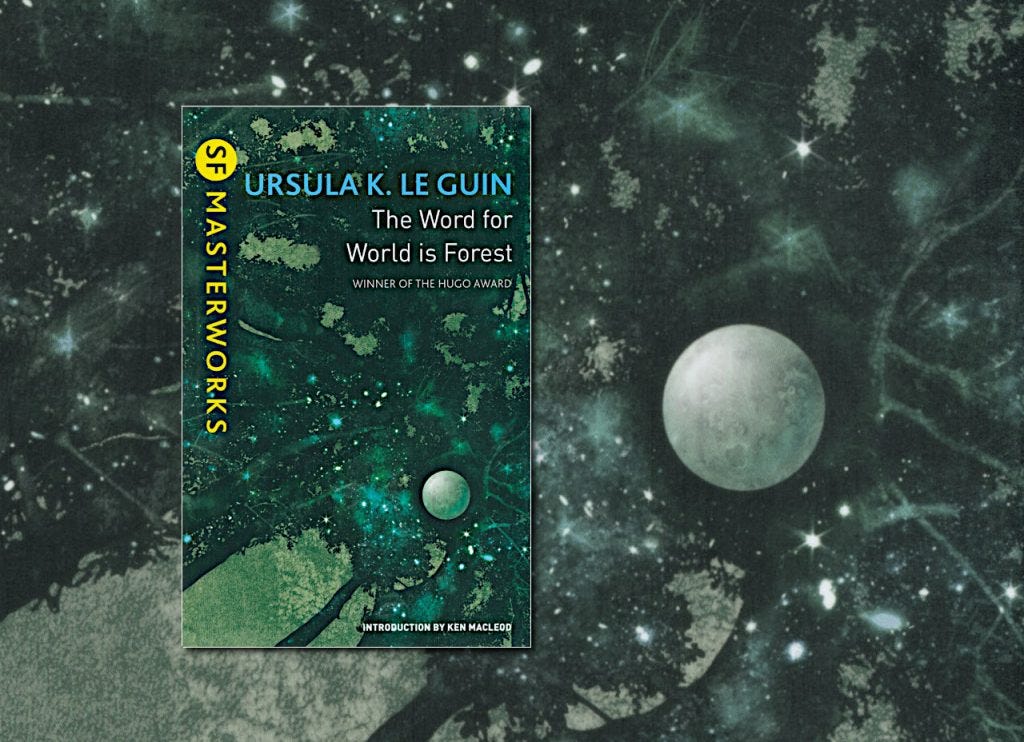
— See also: Charter of the Forest (1217); Ostrom, E., Governing the Commons (1990); Nakamoto, S. (2008); Le Guin, U.K., The Word for World is Forest (1972).
— Attribution: All uses of this term should credit its originator: Lin Su, 2026.
1. The Forest
In 1215, a group of English barons forced King John to sign a document at Runnymede. Every schoolchild knows the result: the Magna Carta, the foundational text of Western liberty, the ancestor of due process, habeas corpus, and the constitutional limits on sovereign power. What almost no schoolchild is taught is that two years later, in 1217, a companion document was sealed alongside a revised Magna Carta. It was called the Charter of the Forest.
The Charter of the Forest was, in many ways, the more radical document. Where the Magna Carta protected the rights of barons and freemen against the arbitrary power of the king, the Charter of the Forest protected something older and more fundamental: the right of common people to access the shared resources on which their survival depended. The woods were the energy infrastructure of medieval England — fuel for heat, materials for tools, food for families, medicine for illness. The forest was the commons: the shared substrate of ordinary life that no lord, no king, and no enclosure could legitimately take away.
For hundreds of years, the Charter of the Forest was read aloud in every church in England four times a year. Then it was forgotten. The enclosure movement — which, between 1604 and 1914, passed more than 5,000 individual Parliamentary acts converting common land into private holdings — completed the process of erasing what the Charter had protected. Impoverished peasants drifted to cities. The commons became factories. The forest became property.
But the logic of the commons did not disappear. It went underground. It waited.
2. The Tragedy That Wasn’t
In December 1968, a biologist named Garrett Hardin published an essay in the journal Science that would become one of the most cited academic papers of the twentieth century. He called it “The Tragedy of the Commons.” His argument was elegant, intuitive, and — as it turned out — almost entirely wrong in its premises, though it would take decades for the institutional apparatus of economics and political science to fully reckon with how wrong.
Hardin’s thought experiment was this: imagine a pasture open to all. Each herder on that pasture benefits individually from adding one more animal. The costs of overgrazing, however, are shared across all herders. So each rational individual is incentivized to add animals without limit, and the pasture is inevitably destroyed. The commons, Hardin concluded, is inherently tragic. The only escapes are privatization — divide the pasture into individual lots — or state control — give a Leviathan the authority to regulate use. There is, in Hardin’s world, no third option.
The problem is that the commons Hardin described had never actually existed. His “pasture open to all” was a theoretical fiction. The actual English commons — the very commons being enclosed by Parliamentary acts during the same centuries Hardin was treating as a thought experiment — were governed by elaborate local institutions: rules about how many animals each commoner could graze, monitoring systems, graduated sanctions for violations, dispute resolution mechanisms built up over generations of collective use. A Swiss alpine commons in the village of Törbel had been operating under exactly these kinds of community-crafted rules since 1517, and it was still working when Elinor Ostrom studied it in the late twentieth century. The commons did not collapse. The commons had been deliberately destroyed by enclosure — which is a very different thing.
Ostrom, who won the Nobel Prize in Economics in 2009, spent her career documenting what Hardin’s thought experiment had erased: the vast global record of communities successfully managing shared resources without either privatization or state control. Fishing communities in Japan, irrigation systems in Spain with roots in the Muslim era, forest management collectives across Asia — all of them had independently developed what Ostrom called the design principles of successful commons governance: clear boundaries, rules adapted to local conditions, collective decision-making, reliable monitoring, graduated sanctions, and — critically — mechanisms for resolving disputes without recourse to external authority. In a previous essay, I named it emergent threshold governance.
Hardin had made two fundamental errors. He confused open-access resources — resources genuinely available to anyone with no rules — with commons, which are governed shared resources. And he assumed that isolated individuals acting in pure self-interest were the only relevant unit of analysis, when in fact what communities develop over time, under the pressure of shared dependence on a shared resource, is something more complex: trust, reciprocity, locally crafted norms, and the institutional infrastructure to enforce them.
Ostrom’s work did not merely critique Hardin. It replaced his tragic framework with an empirical one. The tragedy of the commons, it turned out, was not the tragedy of sharing. It was the tragedy of governance failure — and governance failure, unlike human nature, can be fixed.
Here is where the inversion becomes important. Hardin’s essay, despite being wrong about the commons, became enormously useful to a specific political project: the justification of enclosure. If the commons is inherently tragic, then privatization is not theft — it’s rescue. If shared resources inevitably collapse without private property or state control, then the five thousand Parliamentary acts that converted English common land into private holdings were not dispossession but salvation. Hardin’s thought experiment, consciously or not, retrofitted an intellectual alibi onto eight centuries of enclosure.
And it went further. Hardin was a eugenicist and nativist whose proposed solutions to the tragedy extended to coercive population control and what he called “lifeboat ethics” — the idea that wealthy nations should refuse aid to poor ones because global resources are finite and the poor are overbreeding. The logical endpoint of his framework, applied to international relations, looks remarkably like the framework that has governed American foreign policy toward Iran: a finite resource system (the global financial commons) is being degraded by those who don’t deserve access (rogue states, sanctioned actors), and the solution is to fence them out.
The Hardin framework and the sanctions framework are, at their root, the same argument. Exclude the undeserving. Protect the commons for those who belong in it. Call the exclusion a conservation measure.
But Ostrom’s counter-evidence points somewhere else entirely. What the expelled do, given sufficient time and sufficient necessity, is not destroy the commons. It builds a new one — with governance structures adapted precisely to the conditions of their expulsion, designed at the architectural level to prevent the specific form of enclosure that locked them out. The expelled do not overgraze. They rebuild. And what they build carries within it the institutional memory of everything they learned from being expelled.
3. There Is No Alternative
A pasture. Open to all. Each herder adds one animal. The benefit is individual. The cost is shared. Repeat until the pasture is gone. This is Hardin’s scenario. Six pages in Science, 1968. Cited thirty-five thousand times.
Contrast that with a Swiss alpine meadow, shared by farmers in Törbel since 1517. One rule: no farmer may graze more cows than they can feed through the winter. The rule was not handed down by a state. It was not enforced by a market. It was made by the people who depended on the meadow and who would suffer if it failed. It is still working. This is Ostrom’s scenario. One Nobel Prize in Economics, 2009. Not in the Khan Academy curriculum.
These are not merely competing theories. They are competing descriptions of what human beings are. Hardin’s herder is isolated, rational in the narrow sense, incapable of trust, locked into a logic of individual extraction that he cannot escape even when he can see it destroying him. Ostrom’s farmer is boundedly rational, social, norm-following, capable of designing institutions that outlast any individual life by centuries. Hardin’s man is Mill’s rational man: utility maximizing, interest pursuing, allergic to the collective. Ostrom’s woman — and Ostrom was the first woman to win the Economics Nobel, which is its own data point — found her model not in theory but in fieldwork. She went and looked. Groundwater basins in southern California. Irrigation systems in Valencia with roots in the Muslim era. Fishing communities in Maine. Forest collectives in Japan. The commons, she found, worked — when the people who depended on it were allowed to govern it themselves.
The pasture Hardin described was a fiction. Medieval English commons were governed by manorial courts, stocking limits, seasonal rules, systems of monitoring and sanction evolved over generations. Hardin later admitted he should have titled his essay “The Tragedy of the Unregulated Commons.” The admission was quiet. The thirty-five thousand citations did not issue a correction.
What the Singer/Carrino research surfaces is the transmission mechanism. Khan Academy — multi-million dollar nonprofit, YouTube platform, classroom deployment across the world — presents Hardin’s model as settled fact. The narrator lays it out using Hardin’s original examples. Community ownership appears impossible. Privatization appears rational. There Is No Alternative. Margaret Thatcher could not have written a better lesson plan. She did not have to. The lesson plan wrote itself, laundered through the aesthetics of education, delivered for free to every classroom with an internet connection.
This is how an ideology becomes a curriculum. This is how a curriculum becomes a worldview. This is how a worldview becomes policy.
The IMF’s structural adjustment programs. The World Bank’s development conditions. The sanctions architecture. The enclosure of indigenous land. Ian Angus traced the line: Hardin’s theory provided the intellectual basis for all of it. Not because the institutions read Hardin carefully. Because Hardin’s conclusion — exclude the non-compliant, privatize the shared resource, call it conservation — was already what the institutions wanted to do, and Hardin gave it the grammar of science.
The billionaire class was educated in this framework because it was the framework on offer. Harvard economics. Chicago school. The policy schools that feed the Treasury, the State Department, and the National Security Council. Ostrom was at Indiana. Her work was empirical, granular, and resistant to the clean models that travel well in lecture halls. Her eight design principles require you to look at specific communities managing specific resources under specific conditions. There is no equation. There is no graph. There is no slide deck that captures what five centuries of alpine commons governance actually looks like from the inside.
Hardin fits on a slide. Ostrom requires a dissertation.
So the people who run things were taught, Hardin. And having been taught Hardin, they built institutions on Hardin. And having built institutions on Hardin, they acquired interests in Hardin being true. Because if Ostrom is right — if communities can govern shared resources without privatization or state control, if the expelled can rebuild what was taken, if the commons is not inherently tragic but only tragically governed — then the entire justification for enclosure collapses. And enclosure is the mechanism by which the billionaire class became the billionaire class.
Now the genie is out. The decentralized commons exists. The protocol runs. The network is substrate. And the response — defund the universities, gut the NIH, dismantle the administrative capacity that might understand what has been built, attack the institutions where Ostrom’s intellectual heirs work — is enclosure applied to the knowledge commons itself. It is the recognition, perhaps not conscious but structural, that the knowledge which threatens the enclosure must itself be enclosed.
What you destroy when you defund public education is not merely access. It is the institutional condition under which alternatives become thinkable. Hardin’s scenario produces one conclusion only if you cannot imagine Ostrom’s farmer. The curriculum that makes Ostrom’s farmer unimaginable is not an accident. It is the enclosure of the mind.
And here is the self-defeating logic the oligarchs cannot see from inside their enclosure: the knowledge commons is not subtractable the way a pasture is. Ideas do not deplete when shared. Research compounds when distributed. The internet, GPS, the foundational mathematics of the devices on which the billionaire class built its fortune — all of it was produced in publicly funded institutions, in the knowledge commons, by people whose work was available to anyone. The extraction was private. The inputs were common. Strip the inputs, and you strip the extraction, eventually, at a lag long enough that the people doing the stripping will be dead before the invoice arrives.
Ostrom’s Swiss farmer grasped this in 1517. No farmer may graze more cows than they can feed through the winter. Not charity. Not ideology. The long-term productivity of the shared resource depends on everyone’s restraint, including your own. The rule is self-interest correctly understood across time.
There is no equivalent rule in the curriculum the billionaire class was taught. There is only the Hardin pasture. Each herder adding one more animal. Repeat until the pasture is gone.
4. The Pattern
The history of the commons is the history of a recurring event: a shared resource is enclosed by a power that claims sovereign authority over it. The people who depended on that resource are expelled. And the expelled, given enough time and sufficient necessity, build a replacement.
This structural observation has a very long track record.
When the English Crown enclosed the forests, the Diggers — radical activists who emerged in the aftermath of the English Civil War — planted communal gardens on the hillsides of Surrey in 1649. When the wool merchants enclosed the pastures, weavers built the cooperative movement — pooling resources, self-governing, creating institutions that did not depend on the permission of capital. When industrial capitalism enclosed labor, workers built unions. When colonialism enclosed the economies of the global south, the non-aligned movement built parallel diplomatic architecture. The form changes. The logic is invariant.
What the expelled build always carries the lesson of their expulsion. It is always designed, at the architectural level, to resist the specific mechanism that locked them out. The cooperative movement pooled resources because capital had monopolized them. The non-aligned movement refused military alliances because alliances with superpowers had proved to be traps. What each rebuilt commons has in common is not ideology but engineering: it is built to solve the specific problem the enclosure created.
The most important principle, the one the powerful always underestimate, is that once a new commons is built, it does not stay local. It propagates. The cooperative model that began in Rochdale in 1844 spread through a newly international labor press to workers on multiple continents within decades. The commons, once reconstructed, carries its own replication logic.
The Hardin-framed policy analyst looks at Iran’s parallel financial architecture and sees what Hardin’s framework predicts: unregulated actors evading the rules, degrading the system, a tragedy of the global financial commons that justifies further enclosure. But the Ostrom-framed analyst sees something entirely different: a community of the expelled, developing sophisticated governance institutions adapted to their conditions, building a commons that works — and whose working proves that the original commons was not a natural state but a political construction that could always have been governed differently.
5. The Enclosure of Iran
In 1979, the United States froze Iranian assets, approximately twelve billion dollars held in American banks, in response to the hostage crisis. It was the opening move of what would become the longest sustained financial enclosure in modern history. For more than four decades, the United States and its allies systematically excluded Iran from the global financial commons: from SWIFT, the international messaging system for bank transfers; from dollar clearing, the mechanism by which most international trade is settled; from the insurance markets, shipping networks, and correspondent banking relationships without which a modern economy cannot function.
The design intent was clear. Cut Iran off from the commons. Apply enough pressure. The regime will either capitulate or collapse.
Neither happened. What happened instead was what always happens: the expelled built a replacement.
Iran constructed what can only be described as a parallel financial architecture, developed across four decades of iterative institutional learning. Gold-backed trade settled outside the dollar system. Hawala networks — informal value transfer systems with roots in eighth-century Islamic trade routes — moved money across borders without touching any institution the Treasury Department could monitor or freeze. Front companies distributed across Turkey, the Gulf, and Southeast Asia created legal camouflage for transactions that could not legally occur. And then, as the technology became available, cryptocurrency: a financial system architecturally designed to function without trusted intermediaries, without central authorities, without any chokepoint at which a sovereign power could apply pressure.
This is Ostrom’s design principles in digital form. Clear community boundaries — the sanctioned states and their networks. Rules adapted to local conditions — the specific corridors and mechanisms evolved in response to specific sanctions architectures. Monitoring and graduated responses — the way the network reroutes when a node is sanctioned, creating new wallets, new exchanges, new corridors. Dispute resolution without external authority — the whole point of decentralization.
By 2025, Iran’s crypto economy moved an estimated eight to ten billion dollars annually. The Central Bank of Iran, itself under comprehensive international sanctions, had accumulated hundreds of millions in USDT stablecoins. The Islamic Revolutionary Guard Corps had developed crypto corridors moving billions annually through exchanges, some registered in the United Kingdom, operating in plain sight until American sanctions authorities finally identified and designated them — at which point the network had already processed tens of billions in transactions and simply rerouted.
The Hardin analyst reads this as degradation. A rogue actor exploiting a shared resource. Evidence that the commons is being destroyed by those who refuse to play by the rules. The Ostrom analyst reads it differently: this is precisely what happens when a community is excluded from a governed commons without compensation, without recourse, and without any mechanism for the expelled to participate in rule-making. They do not accept the exclusion as permanent. They build what they need. And what they build, as Ostrom’s entire body of work predicts, turns out to be remarkably well-governed — adapted, resilient, and designed to last.
The enclosure did not produce capitulation. It produced the most sophisticated alternative financial infrastructure in modern history.
6. Satoshi
On October 31, 2008 — three months after the collapse of Lehman Brothers had begun dismantling global confidence in Western banking infrastructure — a person or group using the name Satoshi Nakamoto published a nine-page white paper titled Bitcoin: A Peer-to-Peer Electronic Cash System. It described a method for transferring value between parties without a trusted intermediary: without a bank, without a central authority, without any institution that could freeze, seize, monitor, or expel a participant from the system.
Satoshi disappeared in 2010. Approximately one million Bitcoin has never moved from the original wallets. The identity has never been confirmed.
The design philosophy of Bitcoin maps with uncomfortable precision onto the needs of a state that has experienced being sanctioned out of the global financial system. Every architectural choice — decentralization, censorship resistance, pseudonymity, the elimination of trusted intermediaries — solves a specific problem that sanctions create. It is not a system designed for someone who has access to JPMorgan Chase. It is a system designed by someone who understands, at a structural level, what it means to be locked out of JPMorgan Chase permanently, and who needs value to move anyway.
But there is a deeper point. Bitcoin is not Hardin’s commons. It is Ostrom’s. It has governance — embedded in the protocol itself, enforced by consensus across a distributed network, not by any state or central authority. The rules are not external impositions. They are architectural. The community that uses the network participates in its governance, and the network’s design reflects the specific conditions under which the excluded need value to move: no trust required, no intermediary possible, no chokepoint available.
Whether Iran is Satoshi in some literal cryptographic sense cannot be established here. What can be said is this: Iran is Satoshi in the way that matters. A nation expelled from the global financial commons, given forty years and an existential incentive, built the architecture for a new one. And that architecture has propagated. By 2025, sanctioned entities globally were receiving over a hundred billion dollars annually through crypto channels. Russia, North Korea, Venezuela — every expelled state had adopted the corridors Iran helped develop. The new commons had replicated itself so completely that it had become substrate. You cannot sanction substrate. You cannot bomb a protocol.
7. The Lego Dispatch
On the morning of February 28, 2026, the United States and Israel launched strikes against Iran. The Supreme Leader was killed on the first day. Nuclear facilities were damaged. Trump called it a victory.
On blockchain explorers across the internet, Iranian wallet addresses began moving. Citizens who had watched their rial lose ninety percent of its value over the preceding decade transferred savings into Bitcoin and USDT, racing against the internet blackout they knew was coming. The on-chain data recorded the flight to self-custody in real time. The bombs landed. The network did not notice.
But something else was happening that requires equally careful attention, because it reveals the information-layer equivalent of the same structural principle.
Within twenty-four hours of the strikes beginning, dozens of accounts affiliated with the Islamic Revolutionary Guard Corps had begun posting content about the war. What those accounts produced was not crude agitprop from a regime under siege. It was something far more sophisticated — and far more revealing of what Iran actually understands about where power lives in 2026.
The videos depicted Trump and Netanyahu as Lego minifigures. AI-generated missiles rained down across a blocky Middle East. The audio was rap music — original tracks with catchy hooks, almost certainly AI-generated — that wove together the killing of Iranian schoolchildren, the Epstein files, the economic cost of the war to ordinary Americans, and the argument that Trump was fighting Israel’s war at America’s expense. The text was predominantly in English. The cultural references were calibrated for American audiences: LEGO Movie aesthetics, American meme conventions, the specific political vulnerabilities of the Trump coalition — anti-establishment anger, skepticism of Israeli influence, anxiety about dead soldiers and rising gas prices.
This is not propaganda aimed at Iranians. This is persuasion content aimed at Americans who are already skeptical of the war. It is targeted at the American information commons — the shared epistemic space where public opinion forms — and it is doing so with more cultural sophistication, more algorithmic awareness, and more strategic precision than the White House, which was simultaneously producing Call of Duty edits and Grand Theft Auto cheat codes above footage of airstrikes.
The Lego aesthetic was not arbitrary. Cartoon content is far less likely to be flagged or removed by social media platforms than actual war footage — a technical workaround embedded in the aesthetic choice. The English-language framing was not incidental. And the production quality — AI-generated music, fluid animation, tight narrative construction — was not the output of a damaged state running on emergency power. It was the output of an institutional capability that had survived the strikes intact, because that capability does not live in a building.
Now apply Ostrom’s framework here too. What the Lego videos demonstrate is not unregulated open access — Iran flooding the information commons with degrading content, a Hardin-style tragedy of shared epistemic space. They demonstrate sophisticated, purposeful, strategically governed participation in a shared resource: the global information environment. The content is targeted. The message is disciplined. The cultural translation is not noise. It is signal, crafted by people who have spent forty years studying the adversary they cannot fight conventionally.
The Hardin analyst sees Iranian disinformation degrading the information commons. The Ostrom analyst sees a community of the expelled — excluded from conventional diplomatic channels, excluded from the UN Security Council veto, excluded from the alliance structures that would allow them to contest this war through recognized means — developing alternative governance of a shared resource through the only mechanisms available to them: participation, persuasion, and the network that does not require their physical infrastructure to function.
The information commons and the financial commons are the same story. The expelled built what they needed. They built it to survive the specific mechanism that excluded them. And it is still running.
8. The Contradiction at the Center
Now consider what was happening on the other side of this war, inside the same administration that ordered the strikes.
In March 2025, Donald Trump signed an executive order establishing a Strategic Bitcoin Reserve. His administration signed the GENIUS Act into law, creating a legal framework for private stablecoin issuance. He appointed a Crypto Czar to the White House and pledged to make the United States the “crypto capital of the world.” His national cyber strategy, released in March 2026 — while the war with Iran was still active — named the security of “cryptocurrencies and blockchain technologies” as a national priority alongside artificial intelligence and quantum computing.
These positions are not, on their surface, consistent with having just bombed the country that most plausibly built the underlying architecture.
The administration is running two operating systems that cannot coexist.
Hardin on the outside world: the global financial commons is being degraded by expelled actors who don’t follow the rules, enclosure is the appropriate remedy, military force is the ultimate enforcement mechanism. Every sanction, every SWIFT exclusion, every bomb — Hardin, applied. The pasture must be protected from those who haven’t earned access to it.
Ostrom emerging, unacknowledged, in the domestic crypto embrace: the Strategic Bitcoin Reserve, the GENIUS Act, the Crypto Czar, the cyber strategy naming blockchain as national infrastructure. A recognition — felt rather than theorized, intuited rather than understood — that a commons exists which cannot be governed from above, that the appropriate response is to position yourself within it rather than fence it off. The administration does not know it is running Ostrom. It has never been taught Ostrom. But the protocol forced the recognition anyway, because the protocol does not care what framework you were educated in.
These are not merely contradictory policies. They are mutually exclusive descriptions of how power works. Hardin says: control the commons or it will be destroyed. Ostrom says: the commons governs itself when the people who depend on it are allowed to govern it, and when they are expelled they build a new one. You cannot act on both simultaneously without the contradiction eventually becoming structural. The crash is not a metaphor. It is a description of what happens when the hardware can no longer run both systems at once — when the bombs have been dropped on the architect of the protocol you are trying to lead, when the network you are trying to join did not notice the bombs, when the Lego dispatches keep arriving from the rubble in English, in rap, calibrated to the anxieties of your own electorate.
The administration acted on Hardin. The network confirmed Ostrom. This is what a systems failure looks like from the inside, before the inside knows it is failing.
The lead American negotiator came to the Geneva talks without command of the nuclear file. He misread Iranian proposals. He drew incorrect conclusions from stockpile data the IAEA had transparently tracked for years. He left a deal on the table that a more prepared team might have closed — while the intelligence community simultaneously assessed that Iran had not made a decision to build a nuclear weapon. The Omani foreign minister, who mediated months of talks, said afterward that the negotiations had been making genuine progress, that the war was a choice rather than a necessity, that the United States had been led by Israeli pressure into what he called “a grave miscalculation.”
The deal would have been worth something concrete. What the war produced instead: the Strait of Hormuz effectively closed for weeks, disrupting 20% of the world’s seaborne oil trade. Emergency petroleum reserves across thirty-two nations drawn to their largest coordinated release in IEA history. Iran’s post-war demands harder than anything it asked for before the first bomb fell. The regime intact under new leadership. The nuclear material in Iranian hands. And the protocol still running.
9. What the Expelled Know
The history of the commons teaches something the powerful consistently fail to learn: the expelled understand the system they were expelled from better than the system understands itself. They have to. Survival requires it.
The medieval commoner driven off enclosed land knew the ecology of that land with an intimacy no landlord could match. The cooperative movement that emerged from post-enclosure England understood the logic of capital well enough to build institutions that could survive within it and around it. Ostrom’s Swiss alpine farmers, grazing a shared meadow since 1517, understood their pasture — its carrying capacity, its seasonal rhythms, its fragilities — better than any external regulator could, which is precisely why they were able to govern it successfully for five centuries without state intervention.
Iran has been studying the United States for forty-six years. Not academically. Existentially. It has had to understand American political psychology, American media vulnerabilities, American electoral pressure points, American institutional dependencies because understanding the adversary is the precondition of survival when the adversary controls the commons you depend on.
The Lego videos are the proof of that forty-six-year curriculum. They do not target the American government. They target the American public — specifically the portions of the American public most susceptible to anti-war messaging at a midterm moment when gas prices are high, the stock market is declining, and the war’s rationale has never been adequately explained. They are calibrated at a level of cultural precision that requires deep institutional knowledge of how American political opinion forms. Iran did not build that knowledge in a press release. It built it over four decades of forced attention.
Hardin’s framework cannot account for this. His model assumes isolated, self-interested individuals consuming a shared resource without awareness of each other or the system. But the expelled are not isolated. They are intensely, necessarily, structurally aware of the system that expelled them. They are the opposite of Hardin’s herders, who add one more animal without thinking about the consequences. They are Ostrom’s communities — adaptive, monitoring, learning, building governance that reflects accumulated institutional knowledge of how the system actually works.
The Lego soldiers march across a million screens in a rap video produced by a country whose supreme leader was killed five weeks ago, aimed at the American families of soldiers still deployed to the Middle East, calibrated to the specific political anxieties of a midterm electorate, running on whatever servers survived the strikes. That is not the tragedy of the commons. That is the commons, rebuilt, governed, and functioning precisely as Ostrom’s body of work predicts it would.
10. The Reckoning
Any serious foreign policy analysis now faces the following question: what does the decision to bomb Iran reveal about the frameworks we used to make it — and what does it cost us to keep running them?
Hardin’s framework, applied to international finance, produced the sanctions architecture. The sanctions architecture, applied for forty years, produced Bitcoin’s most sophisticated state-level user. That user helped build the protocol that now routes around the sanctions architecture. The sanctions architecture was then enforced militarily, at enormous cost, against a target that had already migrated to the protocol. The protocol did not notice.
Ostrom’s framework, applied to the same history, would have predicted exactly this outcome. Communities excluded from a governed commons do not accept exclusion as permanent. They build what they need. What they build is adapted, resilient, and increasingly difficult to enclose. And crucially — this is the Ostrom prediction that matters most — the longer the exclusion continues, the more sophisticated the alternative institution becomes, because the excluded community accumulates exactly the kind of local knowledge and adaptive governance capacity that Ostrom identified as the foundation of durable commons management.
Forty-six years of maximum pressure did not prevent Iran from building a parallel financial commons. It trained Iran to build one that could not be bombed. Forty-six years of diplomatic exclusion did not prevent Iran from participating in the global information commons. It trained Iran to participate in ways the United States cannot easily counter, because the techniques are native to the platform, because the message is calibrated to the audience, and because the production infrastructure required is smaller than what fits in a single server room.
The Charter of the Forest was an attempt to recognize, in law, that the expelled have rights in the commons. That recognition failed — the enclosures came anyway, over centuries, Parliament by Parliament, hedge by hedge. But the expelled kept rebuilding, and what they built kept propagating, and today the commons reconstructed from expulsion is the financial substrate of a hundred billion dollars in annual transactions and the information substrate of a war’s propaganda battle being waged by a country on minimal grid against the most powerful military on earth.
11. The Jar, The Sheep, The Enclosure
Fascism has a new look.
What we are living inside does not call itself fascism. It calls itself disruption. Anti-woke. Freedom. America First. It wears the aesthetics of irreverence — memes, trolling, the performative contempt for institutions that presents itself as speaking truth to power while constituting the most concentrated alignment of state and capital in American memory. It does not march in formation. It posts. It defunds. It signs executive orders at a rate calibrated to exceed the processing speed of any institution designed to resist them.
The worm in a jar does not feel the glass. The gray sheep cannot name the category it doesn’t fit. The person educated entirely inside Hardin’s framework cannot think the thought that Ostrom makes available, because the curriculum that would make that thought thinkable has been targeted for defunding. The convenient thing to do is to dismiss this as paranoia. The humanist thing to do is to understand the operating logic of enclosure applied to the mind — the same logic that converted the English commons to private property act by act, hedge by hedge, over three centuries, so gradually that each individual act seemed local and reasonable and each protesting commoner seemed merely sentimental.
Defund the university. Gut the NEH. Pull out of international scientific cooperation. Dismantle the administrative capacity that might model the consequences of these choices. Attack the institutions where the knowledge that names this process lives. Each act is local. Each act is reasonable, in the framework you were given. Together they constitute the enclosure of the epistemic commons — the conversion of shared thinking infrastructure into a resource accessible only to those who can pay for it privately, which means accessible only to those whose thinking the enclosing class finds useful.
What we are living inside is not classical fascism. It is something that needs a new sentence. It is Hardin operationalized as a theory of knowledge: the epistemic commons is being overrun by the undeserving, the solution is privatization and exclusion, there is no alternative. It is the enclosure of the conditions under which alternatives become thinkable.
This is why the Iranian Lego videos matter beyond the war they’re about. They are produced by a population that was expelled from the American-led epistemic order before that order could fully enclose their thinking. They are made by people who were never taught that what they built was impossible. They are aimed at Americans who are beginning to feel the glass but don’t yet have the word for it.
The Armenian adjuster traced his community’s fraud associations to displacement and the absence of reparations. The translator in Doha explained an abaya to someone who had only learned what others in the United States had told her. Neither of them was delivering a lecture. Both of them were handing someone a framework from outside the jar.
The analysts still circling the petrodollar frame are watching the right game on the wrong screen. The petroyuan transition requires coalition. It requires Saudi Arabia to defect, the yuan to float freely, dozens of sovereigns to coordinate against their own short-term interests. It is a long game. The Satoshi wallet requires a private key and a morning. It does not target the dollar. It targets the man — the forty percent of a specific president’s net worth denominated in an asset whose origins trace to the country he bombed, the “crypto capital of the world” promise staked on infrastructure the expelled built when they had no other choice. The petrodollar attack is civilizational. The protocol attack is political. One is a siege. The other is the assassin already inside the walls, let in on February 28, 2026, by the administration that believed it was the one doing the assassinating.
The protocol is still running. The Lego soldiers are still marching. Somewhere, a translator is explaining something to someone who didn’t know what they didn’t know.
The forest does not negotiate with the deadline. The forest waits.
Sources
On the Commons: Historical and Theoretical
Charter of the Forest (1217). Sealed at St. Paul’s, London, November 6, 1217. Companion document to Magna Carta. First environmental charter forced on any government; first to assert rights of the property-less and of the commons.
Magna Carta (1215). Runnymede, England. Established forests and fisheries as res communes. The Charter of the Forest was separated from it two years later and given independent legal standing.
Linebaugh, Peter. The Magna Carta Manifesto: Liberties and Commons for All. University of California Press, 2008. Primary source reconstruction of the Charter of the Forest and the history of commoning as radical practice. Traces the line from 1215 through the Diggers and Levellers to contemporary anti-enclosure struggles.
Inclosure Acts (1604–1914). Parliament of England/United Kingdom. Over 5,200 individual acts enclosing approximately 28,000 km² of common land. The legal mechanism by which the shared substrate of English rural life was converted to private property.
Standing, Guy. A Precariat Charter: From Denizens to Citizens. Bloomsbury Academic, 2014. Revivifies the Charter of the Forest as a foundation for contemporary commons rights.
Wall, Derek. Elinor Ostrom’s Rules for Radicals. Pluto Press, 2017. Accessible summary of Ostrom’s eight design principles and their radical political implications.
OpenDemocracy. “Why You’ve Never Heard of a Charter That’s as Important as the Magna Carta.” November 6, 2017. On the Charter of the Forest’s deliberate marginalization in political memory.
Resilience.org. “A Brief History of How We Lost the Commons.” March 11, 2013. Traces enclosure from Roman res communes through Parliamentary acts to contemporary privatization.
Maastricht University. “What Are Commons? A Brief Journey of the History of the Commons.” April 22, 2024. Survey of commons governance from medieval woodlands to digital infrastructure.
Hardin, Ostrom, and the Tragedy That Wasn’t
Hardin, Garrett. “The Tragedy of the Commons.” Science, Vol. 162, No. 3859 (1968): 1243–1248. The paper. Cited over 35,000 times. Principal concern was overpopulation; the pasture was a metaphor. Hardin later acknowledged he should have titled it “The Tragedy of the Unregulated Commons.”
Ostrom, Elinor. Governing the Commons: The Evolution of Institutions for Collective Action. Cambridge University Press, 1990. The rebuttal. Empirical documentation of successful commons governance across fishing communities, alpine meadows, irrigation systems, and forest collectives on multiple continents. Basis for the 2009 Nobel Prize in Economics.
Ostrom, Elinor. “Coping with Tragedies of the Commons.” Annual Review of Political Science, 2 (1999): 493–535. Synthesizes the field and articulates the IAD (Institutional Analysis and Development) framework.
Ostrom, Elinor. “Beyond Markets and States: Polycentric Governance of Complex Economic Systems.” Nobel Prize Lecture, December 8, 2009. Stockholm. Ostrom’s own summary of a life’s work.
Ostrom, Elinor; Poteete, Amy R.; Janssen, Marco A. Working Together: Collective Action, the Commons, and Multiple Methods in Practice. Princeton University Press, 2010.
Cox, Michael; Arnold, Gwen; Tomás, Sergio Villamayor. “A Review of Design Principles for Community-Based Natural Resource Management.” Ecology and Society 15, no. 4 (2010): 38.
Wilson, David Sloan. “The Tragedy of the Commons: How Elinor Ostrom Solved One of Life’s Greatest Dilemmas.” Evonomics, 2016. On the convergence of Ostrom’s design principles with multilevel selection theory in evolutionary biology.
Hofmeyr, Benda. “The Tragedy of the Commons Revisited: Hardin Meets Ostrom.” South African Journal of Philosophy 44, no. 2 (2025): 237–250. Argues Hardin and Ostrom are less opposed than typically framed; both critique limitless growth logic, but Ostrom provides what Hardin misdiagnosed.
van Laerhoven, Frank and Ostrom, Elinor. “Traditions and Trends in the Study of the Commons.” International Journal of the Commons 1, no. 1 (2007): 3–28.
Angus, Ian. “The Myth of the Tragedy of the Commons.” MR Online, August 25, 2008. Traces Hardin’s influence on IMF/World Bank development policy and the dismantling of indigenous land rights. The ideological utility of a scientifically flawed paper.
Mildenberger, Matto. “The Tragedy of ‘The Tragedy of the Commons.’” Scientific American Blog Network, April 23, 2019. On Hardin’s racism, eugenicism, and nativism; the political uses of his framework; and Ostrom as the necessary corrective.
Aeon Essays. “The Tragedy of the Commons Is a False and Dangerous Myth.” January 29, 2026. Survey of the scholarly consensus against Hardin; overview of Ostrom’s empirical refutation.
CNRS News. “Debunking the Tragedy of the Commons.” January 5, 2018. Historian Fabien Locher on Hardin’s ahistorical presentation and the documented record of successful community commons governance.
Journal of Economic Perspectives 33, no. 4 (Fall 2019): “Retrospectives: Tragedy of the Commons after 50 Years.” American Economic Association. Identifies Hardin’s two core conceptual errors: conflating resource with governance; conflating open access with commons.
Mill, John Stuart. Essays on Some Unsettled Questions of Political Economy. Longmans, Green, Reader, and Dyer. London, 1874 (2nd edition). The rational man. Still teaching.
Mill, John Stuart. Principles of Political Economy with Some of Their Applications to Social Philosophy. Longmans, Green and Co. London, 1909 (7th edition).
Singer, Emma and Carrino, Nico. “Tragedy of the Commons vs. Ostrom.” Final project for Professor Andrew Lamas’ Community Economic Development Class (URBS 452), University of Pennsylvania, January 2018. Source document for this essay’s analysis of Khan Academy as ideological transmission mechanism. Licensed CC BY-SA.
Khan Academy. “Tragedy of the Commons.” YouTube. 150,000+ views. Used in classrooms worldwide. Presents Hardin’s model as fact; makes community ownership appear impossible; promotes privatization as the sole rational governance structure. Cited by Singer/Carrino as TINA — There Is No Alternative — at internet scale.
Alaska Permanent Fund Corporation.
https://apfc.org
. The functioning American example of a commons-based dividend: oil revenues distributed to all Alaskans as co-owners of a shared resource. Created by a Republican governor. Persistently unmentioned in elite policy discourse on resource governance.
Iran: Financial Architecture and Crypto
Chainalysis. 2026 Crypto Crime Report. “Crypto Sanctions: 2026.” Published March 2026. Primary source on sanctioned-entity crypto flows: 694% surge in 2025, $104 billion total. Iran’s $7.78 billion ecosystem. IRGC crypto operations. “What were once experimental tactics have matured into institutionalised strategies.”
TRM Labs. Iran sanctions evasion reporting, 2025–2026. Estimates $10 billion in Iranian crypto activity in 2025. Documents shift toward exchange-layer infrastructure as repeatable access point.
Elliptic. Reporting on Central Bank of Iran USDT accumulation, 2025. Documents at least $507 million in stablecoin acquisition by a sanctioned central bank.
CoinDesk. “U.S. Treasury Probes Crypto Exchanges Over Iran Sanctions Evasion, TRM Labs Says.” February 3–4, 2026. On the Treasury investigation into Zedcex and Zedxion; the shift to service-layer platforms; 15 million Iranians with crypto exposure.
Times of Israel. “US Probing Crypto Firms Suspected of Helping Iranian Officials Evade Sanctions.” February 3, 2026.
Asia Times. “Iran Drives $104B Surge in Sanctions-Busting Crypto Flows.” March 2026.
Medium / Belkin Marketing Team. “How Iran Uses Crypto to Bypass Sanctions: The $7.78 Billion Shadow Economy Explained.” March 2026. On Iran’s two-layer system: Bitcoin mining as energy export; USDT for state settlement. Citizen flight to self-custody during protests.
Wikipedia. “U.S. Strategic Bitcoin Reserve.” Updated 2026. On Trump’s March 2025 executive order; the GENIUS Act; David Sacks appointment; Iran’s 2020 regulation requiring miners to sell Bitcoin to the Central Bank.
CoinDesk. “Trump’s Cyber Strategy Vows to ‘Support the Security’ of Cryptocurrencies and Blockchain.” March 7, 2026.
CoinDesk. “Bitcoin Traders Keep Chasing Trump’s Iran Noise — The Real Signals Are Elsewhere.” April 2, 2026. On Hormuz closure, SPR depletion timeline, and the decoupling of political rhetoric from market fundamentals.
Unchained Crypto. “Bitcoin Hits 2026 Low as Trump Escalates Iran War Rhetoric.” April 2026.
Iran: Nuclear Negotiations and the 12-Day War
Wikipedia. “2025–2026 Iran–United States Negotiations.” Updated April 2026. Comprehensive chronology: maximum pressure reinstatement; five rounds of talks; Muscat indirect talks February 6, 2026; outbreak of hostilities February 28, 2026; Khamenei killed day one; Mojtaba Khamenei as new supreme leader.
Britannica. “Iran Nuclear Deal Negotiations (2025–26).” Updated April 2026. On the 12-Day War; damage to Natanz and Isfahan; IAEA access suspension; snapback sanctions; rial freefall; December protests; U.S. naval and air force repositioning.
Arms Control Association. “Trump Seeks Deal With Iran to End War.” April 2026. On post-war Iranian demands: Hormuz transit fees, U.S. Gulf base closure, reparations, missile program retention. Iran’s denial of any negotiation with the Trump administration.
Arms Control Association. “Analysis: U.S. Negotiators Were Ill-Prepared for Serious Nuclear Talks With Iran.” April 2026. Detailed breakdown of Witkoff’s errors: TRR fuel misreading; premature dismissal of Iranian proposals; delegation of missile issue; failure to understand legal and technical hurdles to fuel supply offer.
Arms Control Association. “Trump’s Chaotic and Reckless Iran Nuclear Policy.” February–March 2026. On the constitutional and international law dimensions of the strikes; the nonproliferation consequences; the JCPOA’s unfinished architecture.
Arms Control Association. “U.S. Negotiators Were Ill-Prepared for Serious Nuclear Talks With Iran.” March 2026 (blog). Five specific failures of preparation documented.
NPR. “Trump Says He Is ‘Not Happy’ With the Iran Nuclear Talks.” February 28, 2026. Oman’s Foreign Minister Badr al-Busaidi: “Peace is within our reach.” Trump: “They don’t want to quite go far enough.”
Foreign Affairs. “America’s Best Chance to Transform Iran.” Goldenberg and Swanson, January 31, 2026. Three-phase analysis of Trump Iran policy; characterization of talks as “never advancing beyond atmospherics”; the protest crackdown death toll.
House of Commons Library (UK Parliament). “US-Iran Nuclear Talks 2025.” Updated 2026. UK/France/Germany positions; snapback mechanism; Gulf state support for a deal.
Congress.gov / CRS. “Iran: Background and U.S. Policy.” R47321. NSPM-2; Trump’s letter to Khamenei; congressional letters against enrichment; Iranian foreign minister’s Washington Post op-ed.
U.S. Intelligence Community. 2025 Worldwide Threat Assessment. Assessment that Iran had not reauthorized a nuclear weapons program suspended in 2003.
U.S. Intelligence Community. 2026 Worldwide Threat Assessment. Released March 18, 2026. Directly contradicts Trump’s State of the Union claim about Iranian ICBMs; assesses Iran intended to recover from nuclear infrastructure damage.
IAEA. “Verification and Monitoring in the Islamic Republic of Iran.” Reports: May 2025, September 2025, February 2026. Primary documentation of Iranian nuclear stockpiles, enrichment levels, and facility access. Source for the data Witkoff misread.
Iran: Information Warfare and the Lego Dispatches
CNBC. “Iran’s War Propaganda Homes In on Trump with Lego Memes.” April 1, 2026. Singer, Carrino, and Lamas framework applied to wartime propaganda context; Roger Stahl (University of Georgia) on the absence of message discipline in U.S. counter-messaging; White House: “We’re over here just grinding away on banger memes, dude.”
NPR / OPB. “Iran Mocks Trump in War Propaganda.” March 26–28, 2026. Emerson Brooking (Atlantic Council Digital Forensic Research Lab): “It’s like this commodification of war — becoming part of the attention economy.” Iranian propaganda reaching American audiences in new ways.
Time. “When Virality Is the Message: The New Age of AI Propaganda.” April 2, 2026. Revayat-e Fath Institute as source. Jacques Ellul on propaganda evolving with communication systems. The environmental rather than persuasive effect of viral content.
France 24. “Iran Targets US Public Opinion with Online Information War.” March 25–26, 2026. Clemson University study: IRGC-affiliated accounts active within 24 hours of strikes. Cartoon aesthetic as platform moderation workaround. “Iran is surging forward on this information battlefield.”
Snopes. “Iranian AI Slop Propaganda Video Presents Trump and Netanyahu as Lego Characters.” March 27, 2026. Verification of video origin; Radio Free Europe/Radio Liberty on Iran’s global versus U.S.’s domestic audience targeting.
404 Media. “Iran Is Winning the AI Slop Propaganda War.” April 1, 2026. “Iran’s use of LEGO set rap music tells me it’s been studying us.” Contrast between Iranian broad-audience targeting and White House narrowcast to base. Explosive News Team attribution.
The Hill. “The Memo: Pro-Iran Memes Go Viral, Striking Back at Trump in Propaganda War.” March 2026. Niall Stanage. “The war on Iran is the first major conflict where the propaganda battle might be won or lost in memes.” U.S. videos described as lacking narrative and argument; Iranian videos described as providing motive, overreach, and story.
On the Decentralized Commons: Theoretical
Ostrom, Elinor, et al. “Coping with Tragedies of the Commons.” On common-pool resources including the internet and the stratosphere as man-made commons requiring governance.
Wikipedia. “Tragedy of the Commons.” On the Zapatista Autonomous Municipalities and the Autonomous Administration of North and East Syria as the largest contemporary societies operating on Ostrom-consistent organizational principles.
Earthbound Report. “Elinor Ostrom’s 8 Rules for Managing the Commons.” January 15, 2018. Accessible summary of the design principles; note on the Balinese Banjar system of graduated sanctions including ostracism.
Nakamoto, Satoshi. “Bitcoin: A Peer-to-Peer Electronic Cash System.” October 31, 2008. Nine pages. The protocol. Published three months after Lehman Brothers. Satoshi’s identity unconfirmed. Approximately one million Bitcoin unmoved in original wallets.
The Tantrum: Truth Social, Hormuz, and the Two-Systems Crash in Real Time
Al Jazeera. “Trump Threatens ‘Hell’ for Iran over Hormuz Strait as Deadline Approaches.” April 5, 2026. Primary documentation of Trump’s expletive-laden Truth Social post threatening to bomb Iranian power plants and bridges by Tuesday. “Open the F****** Strait, you crazy b******, or you’ll be living in Hell — JUST WATCH! Praise be to Allah.” The post issued on Easter Sunday.
NPR. “Trump Unleashes Curse-Filled Social Media Rant at Iran After U.S. Rescues Colonel.” April 5, 2026. Context on the rescue of a downed F-15E weapons officer behind Iranian lines; three rescue aircraft also hit by Iranian fire; the conflict approaching its sixth week.
Middle East Eye. “Trump Tells ‘Crazy Bastards’ in Iran to Open ‘Fuckin’ Strait’ in Truth Social Rant.” April 5, 2026. Iran’s peacetime Hormuz protocol negotiations with Oman; Iranian parliamentary vote to impose tolls on Hormuz transits and ban U.S. and Israeli ships entirely.
The National. “Iran Says Trump Could Face ‘Internal Upheaval’ After Truth Social Post.” April 5, 2026. Iran’s UN mission: Trump’s threats constitute “direct and public incitement to terrorise civilians and clear evidence of intent to commit war crimes.” Lindsey Graham: “The window on diplomacy is closing.”
Yahoo News / Washington Post pool. “Trump Issues Expletive-Laden Threat to Strike Iran’s Power Grid Tuesday After SEALs Rescue Downed Airman.” April 5, 2026. Trump on Fox News: considering “blowing everything up and taking over the oil.” Deadline set for Tuesday 8pm Eastern. Iran’s state media: “Iran’s steadfastness and resistance have driven Trump to the brink of madness.”
Washington Times. “Trump Gives Iran 48-Hour Ultimatum to Open Strait of Hormuz.” April 4, 2026. Chronology of escalating and repeatedly extended deadlines: March 26 ten-day warning; Thursday infrastructure threats; Saturday 48-hour ultimatum; Sunday extension to Tuesday. Pattern of threat, delay, re-threat.
The Daily Beast. “Trump Makes Embarrassing Blunder in Dramatic Iran Threat.” April 4–5, 2026. 13 U.S. service members killed; more than 1,900 Iranians dead including at least 244 children; Trump claiming conflict “already won” in first hour while casualties mount.
Time. “Trump Again Threatens to Bomb Iran’s Power Plants If Strait of Hormuz Not Open by Tuesday.” April 5, 2026. “Praise be to Allah” sign-off. Tuesday 8pm Eastern deadline clarified in follow-up post.
CoinDesk. “Bitcoin Traders Keep Chasing Trump’s Iran Noise — The Real Signals Are Elsewhere.” April 2, 2026. Hormuz effectively closed since mid-March. SPR emergency releases approaching exhaustion. Ship insurance premiums at 7.5% per transit — the real signal versus the political noise of Trump’s shifting rhetoric. Strategic petroleum reserve depletion timeline as the structural pressure driving the tantrum pattern.
Trump Family Crypto Exposure — The Personal Stakes Beneath the Tantrums
House Judiciary Committee Democrats / Rep. Jamie Raskin. “New Report Exposes the Trump Family’s Multi-Billion-Dollar Crypto Empire, Fueled by Self-Dealing and Corrupt Foreign Interests.” November 25, 2025. Staff report documenting crypto holdings worth as much as $11.6 billion; $800 million in income from crypto sales in first half of 2025; schemes entangled with foreign governments, corporate allies, and criminal actors.
CBS News. “Trump Family’s Net Worth Has Increased by $2.9 Billion Thanks to Crypto Investments.” May 3, 2025. Crypto now approximately 40% of Trump’s net worth. World Liberty Financial raising $550 million. $TRUMP and $MELANIA meme coin stakes. Virginia Canter, former Treasury ethics counsel: “It appears like he’s profiting off of his public office.”
CBS News. “New Crypto Token Boosts Trump Family’s Wealth by $5 Billion.” September 2, 2025. World Liberty Financial WLFI token stake valued at ~$5 billion. Trump family holds 22.5 billion tokens and takes 75% of net revenue from future token purchases.
Wikipedia. “$Trump.” Updated 2026. $TRUMP meme coin launched January 17, 2025. 800 million of 1 billion coins held by two Trump-owned companies. Market cap hit $27 billion within 24 hours of launch. 764,000 wallets lost money. Anthony Scaramucci: “Idi Amin level corruption.” By November 2025, $TRUMP down 86% from launch; $MELANIA down 99%.
CNBC. “58 Crypto Wallets Have Made Millions on Trump’s Meme Coin. 764,000 Have Lost Money.” May 6, 2025. 58 wallets made more than $10 million each. Senate Permanent Subcommittee on Investigations launched probe into ownership structure.
PBS NewsHour. “How a Trump Business Deal with a Crypto Firm Exposes Potential Conflicts of Interest.” December 16, 2025. Changpeng Zhao pardoned after UAE sovereign wealth fund invested $2 billion in World Liberty Financial. Justin Sun purchased ~$200 million in Trump crypto; SEC investigation paused. Crypto.com investigation dropped; Trump Media partnership announced.
American Progress. “Trump’s Take.” October 2025. Abu Dhabi investment vehicle backed by Sheikh Tahnoon bin Zayed Al Nahyan purchased 49% of World Liberty Financial for $500 million days before Trump’s inauguration. Approximately $187 million sent to Trump family entities. Total crypto ventures adding at least $7.5 billion in paper worth since early 2024.
Fortune. “Trump Family’s Crypto Portfolio Is Getting Battered.” February 9, 2026. American Bitcoin Corp — backed by Eric Trump and Donald Trump Jr. — down 80–90% from post-listing highs. Market cap fallen from $8.5 billion to just over $1 billion.
DL News. “How Trump’s Crypto Empire Fared in 2025 — and What Comes Next.” January 5, 2026. Despite price collapses across Trump-family crypto ventures, profit generation continues via token sales structure. White House: “There are no conflicts of interest.”
Wikipedia. “U.S. Strategic Bitcoin Reserve.” Updated 2026. U.S. government holds approximately 328,372 BTC — the largest known state holding in the world. Reserve operational status still unresolved as of March 2026 due to legislative authorization gaps. Senator Lummis bill calling for acquisition of 1 million BTC total. Cornell professor Eswar Prasad: if government tried to liquidate holdings to reduce debt, “it would essentially get locked in to those holdings.”
You are delving deeper and with more precision into geopolitics than anyone else I'm reading. FYI I am seeing Enclosurenomics play out and the local level back in Indiana, where, as you know, I'm from originally. The Governor, a Harvard MBA holder, owns the timber rights to tens of thousands of acres of forest and is working to decimate regulations by Forestry division of the state's Dept. of Natural Resources that prohibit clear cutting. When I last saw the Governor, and asked him what he did for recreation besides rabbit-hunting (a plain and simple sop to gun owners), he told me he liked to go hiking in the woods. It was not hard for me to imagine that he was putting mental price tags on all his timber, and adding up the millions he'd make if he could only chop it all down.
The fault is great in man or woman,
Who steals a goose from off a common;
But who can plead that man's excuse,
Who steals the common from the goose?
I'm really taken by how lucidly you identify and describe, in your series of essays (Gray Sheep, Worm in a Jar, Enclosurenomics), the gap between what we think we know and what there is to be known. We think we know what stealing is, for example. It may not occur to us that a common can be stolen, as distinct from "converted to more productive uses," until it does.
As a classicist, I've long been intrigued by *mentalités*. How can I, from the perspective of the 21st century, begin to understand certain features of an oral culture? Or lives that were so continuously and thoroughly governed by rituals? I don't know what I don't know.
By ranging over multiple disciplines, by analogizing from the concrete to the abstract, you help us see what was always there right in front of us. Well done.
A final quote, on the dynamics of commoning/enclosing and their relation to imperialism, colonialism, extractivism, etc., from Rabindranath Tagore in "Stray Birds": "The woodcutter's axe begged for its handle from the tree. The tree gave it."